Works
Novels
Story and other collections
Theatre
Editing & commentary
Non-fiction
Books about GJ
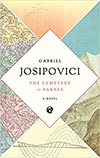
The Cemetery in Barnes
Carcanet Press March 2018
The Cemetery in Barnes is a short, intense novel that opens in elegiac mode, advances quietly towards something dark and disturbing, before ending with an eerie calm. Its three plots, relationships and time-scales are tightly woven into a single story; three voices – as in an opera by Monteverdi – provide the soundtrack, enhanced by a chorus of friends and acquaintances. The main voice is that of a translator who moves from London to Paris and then to Wales, the setting for an unexpected conflagration. The ending at once confirms and suspends the reader’s darkest intuitions.
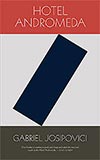
Hotel Andromeda
Carcanet Press June 2014
Hotel Andromeda takes its title from a work by the eccentric American artist Joseph Cornell, whose glass-lidded wooden boxes filled with odd detritus frequently bear the names of provincial nineteenth-century European hotels. Helena, a young writer, is obsessed with Cornell’s work. Its sense of loss frequently echoes that in her own life, especially with regard to her uncommunicative sister, who lives in Chechnya. For Helena, the horrors of war in that strife-plagued country are somehow dimly echoed in Cornell’s moonstruck artefacts. By the end, Cornell has somehow taught her to recreate him ‘with all his maddening foibles, but also his quality as a visionary, an ambiguous visionary, the only kind tolerable in our modern world’. Gabriel Josipovici transforms Helena’s quest into a full-fledged drama, replete with romance and surprises.
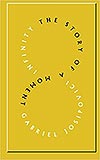
Carcanet Press Ltd. 2012
"The piano is not an instrument for young ladies Massimo, he said, it is an instrument for gorillas. Only a gorilla has the strength to attack the piano as it should be attacked, only a gorilla has the uninhibited energy to challenge the piano as it should be challenged."
Thus Tancredo Pavone,the wealthy and eccentric Sicilian nobleman and avant-garde composer, as recounted by his former manservant in the course of the single extensive interview which is this book. But as Massimo recalls what his master told him about his colourful life in Monte Carlo in the twenties, in Vienna studying with a pupil of Schoenberg's in the thirties, in post-war Paris and in Nepal where he underwent the revelation which fuelled his later music, and repeats Pavone’s often outrageous opinions about everything under the sun, from the current state of civilisation to the inner life of each note, from why beautiful women are always unhappy to the vanity of his fellow composers, it becomes clear that not only does Pavone not always distinguish between memory and fantasy, but that Massimo does not always understand what it is he is repeating. Yet what ultimately emerges is the picture of a moving relationship between two people from very different walks of life, and, above all, the fact that behind Pavone's outrageousness and eccentricity lies a wounded and vulnerable man of profound integrity, for whom living and making music were always one.
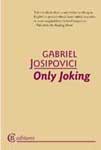
CB Editions 2010
– You know what the secret of being a good clown is, Elspeth? he asks.
– No, she says. You've told me but I've forgotten.
– Innocence, Elspeth, he says. A clown is innocent. He is innocent because he has not been born into our world. He is innocent, Elspeth, because he has not been born at all.
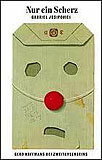
Alphonse, an accordion-playing ex-clown, is hired by the Baron to spy on his wife, for whom, unknown to the Baron, he is already working. The intricate shadow-play that ensues moves at a pace that quickly blurs the distinctions between jokes and lies, art and evidence, until with a final tug at the strings the characters – barons, clowns, art students, art collectors, film-makers, restaurateurs – are brought into unexpected alignment with their several objects of desire.
published in Germany as Nur ein Scherz (2005)
Publisher's information
Review in Der Spiegel
German edition available from Amazon.de
Two Novels:
After andMaking Mistakes
Carcanet
Press Ltd. 2009
There's a woman pursuing me, Alan says. I knew her ages ago in the States... She says she's come to find me.
- Why?
- I don't know... The only thing I know is that I'm afraid of her.
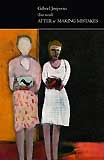
After is haunted by a traumatic memory. A woman re-enters the life of a man after fifteen years - for vengeance? for reconciliation? Or is her return only imagined? Gabriel Josipovici's taut novel draws the reader deep into a relationship, the volatile mix of guilt, memory and desire. Tension builds to a violent climax that shatters illusion.
Making Mistakes explores the ironies of relationships more playfully. In a reworking of Mozart's Cosi fan tutte, two couples change partners - and change again - with the connivance of a modern Don Alfonso and his Despina. The cost to the couples of discovering their true desires is high; as in Mozart, things end happily (at least for the moment). The lovers learn that one does not make mistakes, one makes choices.
Both novels reveal Josipovici's celebrated wit and precision, character and narrative revealed through dialogue. Through tense eroticism and sparkling comedy, each explores complexities of twenty-first-century life.
Everything Passes
Carcanet Press Ltd. 2006
A mysterious web of solitude, love, illness, and loss is seamlessly woven into a captivating historical and personal narrative in this poignant yet concise novel. As three characters move through their increasingly haunting lives, they discover how to piece together their past and recreate connections.
Publisher's information
Review at Ready Steady Book
Review at Tales from the Reading Room
Amazon US
Amazon UK
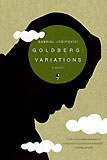
Goldberg: Variations
Carcanet Press Ltd. 2002
"Taking his cue from an anecdote connected with Bach's late masterpiece, the Goldberg Variations, Gabriel Josipovici imagines an English Writer at the turn of the eighteenth century, a Jew who is invited to the house of a country gentleman in order to read to him in the evening and send him to sleep. The thirty 'Variations' can be read as disconnected stories on varied topics -- incest in the Orkneys, madness in Chester, a poetic competition at the court of George III, a marital quarrel -- or as a weaving together of past and present until a bizarre climax in achieved.
"Part an homage to Bach, partly pure fiction conjuring ghosts from the past -- Holderlin, Kierkegaard and others haunt its margins -- this is a book as exciting, though-provoking and entertaining as any Josipovici has written." --from the cover
UK edition available from Amazon UK
Amazon US
US edition available from
Amazon US
Barnes & Noble US
REVIEW BY STEPHEN MITCHELMORE
Now
Carcanet Press Ltd. 1998
Written entirely in dialogue, this novel is about families, parents and children, partners and lovers. The incidents are commonplace: going to work, the weekend, the afternoon of furtive sex, the art exhibition. The novel is about now, where urban people are today, and where they might go.
Softcover edition ISBN: 185754367X
available from Barnes & Noble US
 |
 |
German editions available from Amazon DE |
|
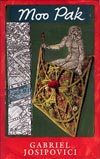
Moo Pak
Carcanet Press Ltd. 1994
Covering 151 pages in paragraphless text, Moo Pak is the story of an irregular friendship between Damien Anderson and a writer, Jack Toledano.
Although the narrator is Anderson, the novel is almost entirely in the reported words of Toledano. As the friends walk around London, Toledano
tells Anderson of his progress in writing a novel about the stately mansion Moor Park in Surrey, variously the home of Jonathan Swift, a base for the
study of chimpanzees, and a decoding centre during the Second World War. This leads him into monologues of extraordinary range and erudition, often with half a dozen references to artists and writers on each page. It is a stimulating and often hilarious satire on those "ambitious" novels dealing
with world history that seem to appear every few weeks. It ends with a moving twist in the tale.
Hardcover ISBN: 1857540905
available from Barnes & Noble US
Softcover ISBN: 1857542878
available from Barnes & Noble US
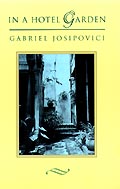
Carcanet Press 1993
New Directions 1995
In a series of conversations that take place in his friends house in Putney Heath, Ben tells of a vacation to the Dolomites that signalled the end of his relationship with Sand, his girlfriend at the time, but opened up the possibility of a new one with the reserved, even somewhat remote, Liliane, or Lily. She had just been to Siena, looking for a garden in a hotel that was a significant place for her grandmother, a Jewish woman from Constantinople, who spent an ordinary day there, a day that became extraordinary because of the war and its effects on the family. To Lily that day in the hotel garden has become a way for her understand herself, her family, and the Holocaust. Constructed mostly from dialogue, the book presents multiple portraits of Ben, his friends, and the two women, along with a strong sense of the texture of their lives, while unfolding the story of Lily and her grandmother's day in the hotel garden.
Softcover US edition ISBN 0811212912
available from Barnes & Noble US
Hardcover UK edition ISBN 085635998X
possibly available from Amazon UK
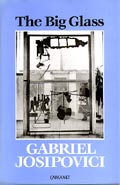
Carcanet Press 1991
A meditation on art and its creation, in the form of a series of notes by the artist Harsnet on the making of Big Glass, based on Marcel Duchamp's Large Glass and its accompanying notes. Harsnet is a wit and a prankster, and his notes record much of his life at the time in the form of a continuous stream of information and reflection that indiscriminately incorporates shopping lists and other mundane details of his life. The reader sees part of the plot through the marginal notations and explanatory writings of a former fellow artist, Goldberg, now turned critic and teacher, who is transcribing the notes. The careful construction of the novel delivers the story with clarity, along with a good deal of humor, and with an unexpected ending.
Hardcover edition ISBN 085635905
available from Barnes & Noble US
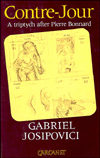
Carcanet Press 1986
Obsession and rejection are the main themes of this novel about a woman who feels rejected by her parents, particularly by her mother. Her father, a painter, ignores the emotional turmoil all around him and continues to work, while his wife shows signs of mental breakdown. This novel was shortlisted for the 1986 Whitbread Fiction Prize.
Hardcover ISBN: 0856356417
available from Barnes & Noble US
Softcover Carcanet Press, Ltd. 1998 ISBN: 1857544102
available from Barnes & Noble US
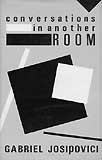
Methuen Publishing Ltd.
1984
out of print
"In a quiet room, in a flat, an old woman lies in bed. Beside her sits her niece, a regular visitor. They gossip and reminisce. They are allies and also antagonists.
"Other people are also in the flat, to whom the two female voices -- one querulous and distinct, the other higher and softer -- are audible. They too have roles in the conversation, and in the elliptical, impenetrable ebb and flow of past and present relationships.
"This timeless configuration, reflective and sonorous, is the setting of Gabriel Josipovici's funny yet sharply penetrating new novel. Simple in form, its effect is complex and remarkable, a Chinese box of a book which ultimately examines the nature of fiction itself. This is a haunting and impressive work which marks a new level of achievement by a prize-winning novelist." --from the dust jacket
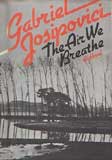
Harvester Press
1981
out of print
"Like all his work, [The Air We Breathe] is penetratingly intelligent and convincingly eerie, yet it achieves a new clarity and light. Concerned above
all with the difficulties inherent in human communication outside and beyond language, The Air We Breathe conveys a sense of achievement and release, in which it is impossible to separate the triumph of the heroine -- in her search to understand her haunting past -- from the artistic triumph of the
author." -- from the dust jacket
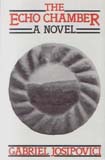
Harvester Press
1980
out of print
"Set in an English country house, this novel combines the comedy of manners with the acerbity of the psychological thriller.
"At first glance, the house appears to be a haven in which Peter can recover from the breakdown which has left him without a past. But there is something ominous about the inhabitants which soon challenges his precarious security. For Peter the house in the country becomes a chamber of echoes … or is it a chamber of horrors?
"His friendship with Vonnie gives him hope that he can, with her help, unravel the mystery of the past and so regain his confidence in the future. Yet the echoes which haunt him from just beyond the reach if his memory assume terrifying proportions and drive him helplessly towards a tragedy which he realises he cannot avert and for which he must assume responsibility." -- from the dust jacket
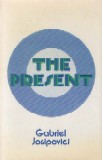
Gollancz
1975
out of print
The Present is about the present, with its infinite, unrealised possibilities, a gift that withers and crumbles before it reaches us. It is a myriad realities, all equally probable, all equally unreal: Minna and Reg, married and childless, sharing their North London flat with their eccentric lodger, Alex; Minna married to Alex and living in the country with him and their two children; Minna in hospital after a breakdown, subject to fantasies and frightening memories; Minna and Reg in their North London flat trying to come to terms with Alex's suicide. Which of these realities is present, which past, which imagined, which lived through.
The novel is concerned not so much to tell a story as to explore a state: that feeling of being becalmed, adrift in a present cut off from past or future, when the imagination churns furiously and at random, re-arranging compulsively a handful of elements into story after story. But, as the novel develops, it grows clear that is there is to be any escape from this state it will lie not in the feverish construction of yet more stories but in the recognition and acceptance of the hardly bearable absence of all stories. -- from the cover
Harvester Press 1977
out of print
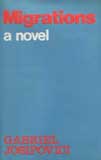
The epigraph is from the Hebrew Bible: "Arise and go, for this is not your rest." (Micah 2:10). A man walks down a deserted road in South London. It is night. He falters, then falls. He lies still under the glare of the street lamps. A man paces up and down an empty room. He pauses at the window, looks down into the sunlit street. Is it the same man? Who is he? Why is he there?
As we read, we become aware that these questions are being asked not only by us but within the book itself. We grow gradually conscious of a self-searching desperately, despairingly, for a place in which to settle. -- from the dust jacket:
In the conclusion to The Mirror of Criticism, "True Confessions of an Experimentalist," Josipovici responds angrily to the sneering, or at best patronising, reviews for this novel. While they saw only a wilful abstraction, Josipovici says the novel was "written more directly from the heart than anything else of mine" and worried it might be "too raw, too personal." He argues that the criticism was due less to the novel's faults than to the reviewers' assumptions about what is "natural" writing and what is not.
Gollancz 1971
out of print
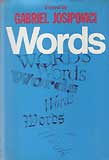
"Louis and Helen's marriage is rubbing along comfortably when an old flame of his, Jo, proposes to pay them a short visit. The suggestion is a little odd: Jo has been out of touch with Louis for years, and she has never met Helen. But Helen seems quite agreeable to the idea, and it's Louis who is somewhat disconcerted, edgy, ready to make difficulties. Jo arrives with her small daughter Gillian, whom she hasn't mentioned, and who proves to be a most disconcerting child, remote and brooding.
"The visit passes pleasantly enough, at least on the surface. The ice is thin, but that doesn't deter the protagonists from performing formal exercises of great dexterity with splendid aplomb. The very quite cut and thrust of the dialogue is masterly, carrying understatement to the point of being witty in itself. Soon Jo and Louis are delicately probing into their old affair, asking each other how it came to end. Jo hadn't wanted it to end, nor had Louis: there had been a sad misunderstanding. And now? Well, they could still run away together, couldn't they?
"Another source of tension in the household is provided by Louis's brother Peter, who delights in private jokes at the expense of everyone, unnerving descriptions of events that have never actually happened.
"In and out of the talk, the dinner parties, the swimming sessions, wanders the silent little girl, observing, keeping herself to herself even when the next-door children invite her to play.
"With extreme economy and exact precision Words tells us all we need to know about a complex emotional situation. As Harold Pinter wrote, Gabriel Josipovici has 'a very individual voice'." -- from the dust jacket
Michael Joseph 1968
out of print
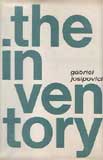
"Invent. Inventory. The title is ambiguously suggestive, pointing both inwards to the world of imagination and memory, and outwards to the everyday world of material objects.
What happened in those few months Susan spent in the flat with Sam and the old man? Her compulsive monologues, groping for the answer amid the neutral surfaces of the objects once in their possession and now to be inventoried, trying out then discarding one explanation after another, slowly uncover the clichés by which each of us tries to master experience and to give meaning to his life.
Other characters include the mysterious Brown, the overwrought Gill Clemm and her three offspring, Mick, Brigid, and Baby Choo. Oscar has a non-speaking part, and the incidents range from a brawl in a pub to a late-night encounter with the police.
Gabriel Josipovici's short novel combines formal elegance with verbal wit. The book develops out of three intertwining time-schemes. The description and narration which form the bulk of most novels has been replaced by a sharp and swiftly-moving dialogue that brings the characters immediately to life. It is in fact a very uncomplicated book, haunting and at times extremely funny." --from the dust jacket
Story and other collections
Novels
Story and other collections
Theatre
Editing & commentary
Non-fiction
Books about GJ
Heart's Wings
Carcanet Press
2010
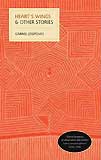
There are no objects any more. There were never any objects. Now you know. Don't look for me. By the time you read this I will be far away. You will never find me.
Gabriel Josipovici's stories play hide and seek with the reader. Whether they take place in a seedy London nightclub in the sixties, in a brothel in Hamburg during the First World War, in the fevered world of Shakespeare's mind as he writes Twelfth Night or in that of the dying Borges as he dreams of Finland and the Kalevala , in an airport outside Berlin, in Bukovina in 1942... one thing is certain: you are never quite where you think you are and what is happening is never quite what you think is happening. No matter how short the story – and many are no more than two or three pages long – by the time you have finished reading you will have travelled an unimaginable distance, and will never be quite the same again. Heart's Wings gathers 23 stories written over the last 40 years.

Carcanet Press
1990
out of print
A collection including the novels The Inventory and The Air We Breathe, with stories and plays taken from above collections.
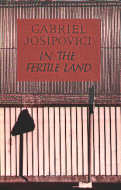
In the Fertile Land
(includes three of Four Stories)
Carcanet Press
1987
out of print
In the Fertile Land includes 18 short stories and a novel – a decade's work. Gabriel Josipovici explores varieties of distance and exile: mirrored rooms, absence, echoes – and the impulse to change. He captures the ways in which we perceive and interpret our own life stories, focusing on critical moments, on the hesitancy that stiffens into inertia or the decision that breaks the spell. 'He' is the only autobiographical piece here; but other stories have the feel of experiences distinctly lived in language. Some find their occasions in paintings, others have historical sources – memories of the life of Ingeborg Bachmann for instance – or grow out of remarks by Stockhausen or Stravinsky, or out of Shakespeare. Josipovici comments on his sense of 'not belonging to any one culture or any one country – even any one language'. This restlessness is a rare freedom.
Four
Stories
Menard Press
1977
out of print
Through the four very different pieces collected here run lines of consistent preoccupation: with limits, with time, with the brutal paradoxes of creativity. But these preoccupations are enacted discoveries, not the illusory serenties of argument or exposition. Mr. Josipovici catches with rare poignancy the disorder of feeling that marks the border between art and experience. The writer, by act of forging a world durable and whole, is often seen as triumphing over time and flux; but he also, and this is what Mr. Josipovici sees with painful clarity, underscores the discrepancy between the two creations. To write of loss is to align words, not to shed tears or hug memories; it is to set something living in the place of the dead. The surges and counter-surges of feeling prompted by this discovery, the ruses of imagination and the revenges of fear and anger, give memorable force and intricacy to the writing. For it is in writing that the writer is called to attempt the impossible resolution. – George Craig
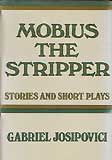
Stories and Short Plays
Victor Gollancz
1974
out of print
"With those patterns who am I?" asks Mrs Fraser, as much of herself as of the audience, as she exhibits her naked tattooed body in a cage in Hyde Park, and Mobius, the fat stripper ending his days in a sleazy Notting Hill club, harangues his audience: "This fat. You feel her. Here. Like it's folds of fat, see. And it's me, Mobius. This the mystery. I want to get right down behind this fat to the centre of me." In these brilliantly hypnotic stories and short plays the characters act or speak in the desperate hope of surprising themselves into an awareness of who and what they are, of how their pasts relate to them and, above all, what is the meaning of those strange animals, their bodies, to which they are attached.
In one sense, Gabriel Josipovici provides a simple answer to their anguished questions, for both Mrs Fraser and the endless digressing hero of One are actors on a stage, and Mobius himself is only a character in a story known (to the reader but not to him) to be shaped like a Möbius strip. Paradoxically, however, the very recognition of this fact robs the reader of his normal hold on reality and plunges him into a world where he both hero and victim, flailing protagonist and helpless spectator of his own disintegration. He may protect himself by calling it a world of nightmare, but the thought will remain, tugging at his consciousness, that it is at once too ludicrous and too harrowing a world not to be the real one – if one he would look at it.
SPAN, the Windsor Arts Centre Press
1981
out of print
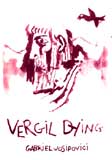
Brindisi, 19 B.C. Vergil has arrived from Athens with the Emperor Augustus's fleet, bound for Rome. He has caught a chill on the voyage and this has rapidly grown worse. He lies in his room in the royal palace. In one corner of the room there is a metal casket which encloses the manuscript of the 'Aeneid', which the poet insists on carrying with him everywhere.
As his strength begins to fail he reviews his life. He is troubled by the feeling that he has devoted his greatest imaginative powers to furnishing Rome with glorious self-images. He feels that he has separated himself from a deeper level of honesty and fulfilment. Above all, he is gripped by the fear that he has only been a spectator of life: "You cannot go on living since you have never lived... You have not turned the spark into a flame, you have only used it to liqht up your corpse."
This monologue, with its extraordinary variety of rhythms, moods and images, forms a prism for the historical imagination, not only bringing the past to life, but casting the present in a new light. The play is ultimately about the torment of consciousness itself -- the fact that whatever consciousness reveals of life, it also seems to separate us from natural fulfilment and substitutes a representation which can never be fully equated with life.
"'Vergil Dying" was written for Paul Scofield, who rendered it in a brilliant radio performance, first broadcast on 29 March 1979. -- from the cover
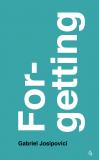
Carcanet Press
January 2020
From the publisher:
We cannot understand the phenomenon of remembering without invoking its opposite, forgetting. Taking his cue from Beckett - 'only he who forgets remembers' - Josipovici uncovers a profound cultural shift from societies that celebrated ritual remembrance at fixed times and places, to our own Western world where the lack of such mechanisms leads to a fear of forgetting, to what Nietzsche diagnosed as an unhealthy sleeplessness that infects every aspect of our culture.
Moving from the fear of Alzheimer's to invocations of 'Remember the Holocaust' and 'Remember Kosovo' by unscrupulous demagogues, from the burial rituals of rural societies to the Berlin and Vienna Holocaust Memorials, from eighteenth-century disquiet about the role of tombs and inscriptions to the late poems of Wallace Stevens, Josipovici has produced, in characteristic style, a small book with a very big punch.
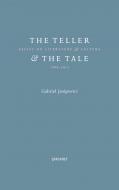
The Teller and the Tale
Carcanet Press
October 2016
"We seem to live, intellectually and emotionally, in sealed-off universes," writes Gabriel Josipovici in an essay on Hebrew poetry in medieval Spain, just one in a lively multiverse of writings gathered in The Teller and the Tale. The book draws on a quarter of a century’s worth of critical reflection on modern art and literature, Biblical culture, Jewish theology, European identity, the nature of beginnings, and the bittersweetness of writing fiction – to name but a few of the subjects upon which Josipovici’s ranging, pansophic attention rests. The author describes paths between these distant regions of space and time with characteristic warmth and ingenuity. Proust, Kafka, Woolf, Pasternak, Eliot, Spark, Valéry, and Beckett dwell here alongside Dante, Shakespeare, Sterne, Cervantes, and the Brothers Grimm. Each of these great writers is a point of departure for personal reflection, and a series of critical essays takes on a second life as a book of intimate recollections and fond remembrances, recalling departed friends and peers, evoking the pain and ecstasy of childhood, the personal struggle to be a writer, and the life-long project of becoming a person. Here is a snapshot of influences on one of the English language’s most distinctive voices, and an opinionated, sensual, and informed exposition on Western literature and culture.
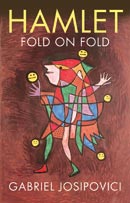
Hamlet: Fold on Fold
Yale University Press
March 2016
William Shakespeare's Hamlet is probably the best-known and most commented upon work of literature in Western culture. The paradox is that it is at once utterly familiar and strangely elusive—very like our own selves, argues Gabriel Josipovici in this stimulating and original study. Moreover, our desire to master this elusiveness, to “pluck the heart out of its mystery,” as Hamlet himself says, precisely mirrors what is going on in the play; and what Shakespeare's play demonstrates is that to conceive human character (and works of art) in this way is profoundly misguided.
Rather than rushing to conclusions or setting out a theory of what Hamlet is “about,” therefore, we should read and watch patiently and openly, allowing the play to unfold before us in its own time and trying to see each moment in the context of the whole. Josipovici’s valuable book is thus an exercise in analysis which puts the physical experience of watching and reading at the heart of the critical process—at once a practical introduction to a great and much-loved play and a sophisticated intervention in some of the key questions of theory and aesthetics of our time.
“His first book on Shakespeare and it is typically original… Josipovici is such a great critic because he has a nose for the big questions and for what doesn’t work as an answer. Best of all, he reads carefully and asks the right questions.” – David Herman, Jewish Chronicle
“Full of resonant and evaluative comparisons… Josipovici’s historicism, like that of T.S. Eliot whom he he quotes often, is broad-brush and confident… a careful character-based plot summary, the book does give moments of real insight.” – Bart Vanes, TLS
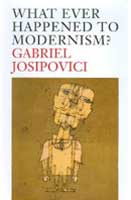
What Ever Happened to Modernism?
Yale University Press
September 2010
The quality of today's literary writing arouses the strongest opinions. For novelist and critic Gabriel Josipovici, the contemporary novel in English is profoundly disappointing—a poor relation of its groundbreaking Modernist forebears. This agile and passionate book asks why.
Modernism, Josipovici suggests, is only superficially a reaction to industrialization or a revolution in diction and form; essentially, it is art coming to consciousness of its own limits and responsibilities. And its origins are to be sought not in 1850 or 1800, but in the early 1500s, with the crisis of society and perception that also led to the rise of Protestantism. With sophistication and persuasiveness, Josipovici charts some of Modernism's key stages, from Dürer, Rabelais, and Cervantes to the present, bringing together a rich array of artists, musicians, and writers both familiar and unexpected—including Beckett, Borges, Friedrich, Cézanne, Stevens, Robbe-Grillet, Beethoven, and Wordsworth. He concludes with a stinging attack on the current literary scene in Britain and America, which raises questions about not only national taste, but contemporary culture itself.
Gabriel Josipovici has spent a lifetime writing, and writing about other writers. What Ever Happened to Modernism? is a strident call to arms, and a tour de force of literary, artistic, and philosophical explication that will stimulate anyone interested in art in the twentieth century and today.
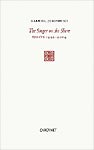
The Singer on the Shore: Essays 1991-2004
Carcanet, 2006
The novelist Gabriel Josipovici's new book of essays ranges from writings on the Bible, Shakespeare, Kafka, Borges and the Israeli novelist Aharon Appelfeld to considerations of Rembrandt's self-portraits, death in Tristram Shandy, and what Kierkegaard has to tell us about the writing of fiction. From the title piece, which examines the relationship between artists' works and their beliefs, to the concluding meditations on memory and the Holocaust, The Singer on the Shore is unified by the twin themes of Jewish experience, with its consciousness of exile and the time-bound nature of human activity, and of the role of the work of art as a toy, to be played with and dreamed about.
Josipovici's explorations are informed by his own experience as a novelist. He is thus both authoritative and undogmatic. This volume, like a book of poems, rewards repeated reading: it not only illuminates the topics with which it deals, it also raises the large question of the place of art in life and of the possibilities open to art today.
'Gabriel Josipovici is a deeply perceptive critic, always rewarding with a wide range of reference. The Singer on the Shore is a beautifully written and enjoyable book.' - Dame Muriel Spark --from the publisher's page
http://www.carcanet.co.uk/cgi-bin/indexer?product=9781857548440
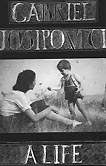
London, London Magazine Editions, 2001
"Born in Egypt, of European Jewish extraction, she married in France in the 1930s, separated, and escaped from Nice in 1944. After the war she returned to Egypt, then moved to England for the sake of her son’s education. For a short time, while her son was at Oxford, she lived in Putney and worked in a bookshop. Then she moved into a house with him outside Oxford because it was cheaper than paying two lots of rent (she worked at Blackwells). They lived together until her death in the 1990s. She was the most important person in his life, and he felt bound to write about her – both in homage and from love. She comes across as a shy but strong woman, very sympathetic. The book is moving and intense."
--From the review by Johnny de Falbe at
John Sandoe in London, where it is available.
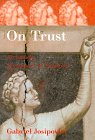
On Trust: Art and the Temptations of Suspicion
Yale University Press
1999
A discussion of whether it is possible to create art today with the freedom of earlier ages and yet produce works that are more than merely decorative or commercial. The author argues that art is always made out of a deep confidence of being the world, and therefore in time and language.
Review by Stephen Mitchelmore
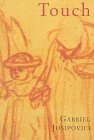
Touch
Yale University Press
1996
Asking how it is possible to feel at home in the world, given that the world is independent of and indifferent to our wishes, this text draws on books, films and cultural history to argue that we can feel comfortable in the world and in relationships with others only if we value touch over sight.
Text and Voice
Carcanet Press
1992
"His wide-ranging opening essay shows how Protestant misreadings of scripture after Luther stem from a view of the Bible as a text to be deciphered rather than an invitation to participate in a communal activity. This theme is taken up in the title essay, where Keats' remark that he never understood Homer till 'I heard Chapman speak out loud and clear' is contrasted with the emphasis of theorists like Ricardou and Derrida on the work as (silent) text. In a full-scale attack on structuralism and the wilder aspects of deconstruction, Josipovici shows how such an approach suits the academy, denying the existential impact of art that asks us to listen and respond rather than dominate and control.
"These concerns illuminate essays on Dante, Wordsworth, Proust, Beckett, and Perec, and on the critics Maurice Blanchot and Roland Barthes. The book concludes with the acclaimed Northcliffe Lectures, 'Writing and the Body' which present a concerted argument about the place of the body in writing and reading, developing the thesis through suggestive analyses of Sterne, Shakespeare, and Kafka." -- from the dust jacket
Josipovici introduces this volume by asking why artists’ profoundest criticism can often be found in their letters and incidental remarks. We might add: "and their reviews."
The
Book of God: A Response to the Bible
Yale University Press
1988
Is the Bible one
book or a collection of writings? If it is a book, what kind of book is
it and does it stand as a coherent piece of literature? Building on the
recently renewed interest in biblical narrative associated with Erich
Auerbach, Northrop Frye, and Robert Alter, Gabriel Josipovici here sets
out to answer these and other fascinating questions in this beautifully
written book, which constitutes a rethinking of the nature of the Bible
and our relation to it.
Referring to the Hebrew, Greek and English
texts of the Old and New Testaments, Gabriel Josipovici begins by examining
the different conceptions of unity that underlie the Hebrew and Christian
scriptures, and then analyses what he sees as the Bible's three defining
characteristics: its rhythm, its attitude to speech, and its conception
of character. He also discusses the role of memory and genealogy in the
Hebrew scriptures, St Paul's conception of human character, and the different
responses of Kierkegaard and Thomas Mann to the stories of Genesis. The
volume includes a bibliography, and indexes of names and of Biblical passages.
The Mirror of Criticism:
Selected Reviews 1977-1982
Harvester Press
1983
out of print
This is a selection of reviews for various publications: the New York Review of Books, the Sunday Times, the Times Literary Supplement and the Jewish Quarterly among others. The subjects are Dante, Chaucer, Meyer Schapiro, Rabelais, Joyce, Woolf, Kafka, Walter Benjamin, Bruno Schulz, Nabokov, W.H. Auden, Graham Greene, Borges, Beckett, Donald Davie, Bernard Malamud, Robbe-Grillet, Saul Bellow, Günter Grass, Picasso and Hebrew poetry, plus a conclusion strongly defending the author’s own artistic practise.
the Northcliffe Lectures 1981
Harvester Press
1981
out of print
A concerted argument about the place of the body in writing and reading, developing the thesis through suggestive analyses of Sterne, Shakespeare, and Kafka, is presented in what was originally a series of four lectures; reprinted in Text and Voice, below.
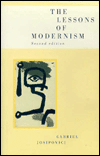
Macmillan
1977
out of print
"What are the relations between a man's life and his art? What is the place of modern art, with its underlying principles of fragmentation, dislocation and parody, in the culture and education of today? What are the limits of human expression and of the expressivity of voice and body? These are some of the questions raised by Gabriel Josipovici in this collection of essays."
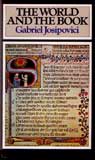
Macmillan Publishers
1971; 2nd edition 1979, 3rd edition 1994
out of print
The first collection of non-fiction began, he says, as an undergraduate at Oxford, but developed over his first ten years as a teacher. It has 12 essays, five on general themes, five on individual writers -- Proust, Chaucer, Rabelais, Hawthorne, William Golding -- and two on specific novels, Nabokov's Lolita and Bellow's Herzog. Together these essays demonstrate Josipovici's continuing concern with the art of the Middle Ages and its connections with Modernism.
Editing and commentary
Novels
Story and other collections
Theatre
Editing & commentary
Non-fiction
Books about GJ
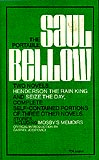
The Portable Saul Bellow
Critical Introduction by Gabriel Josipovici
The Viking Press
1974
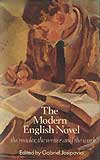
Open Books
1975
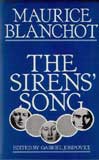
Translated by Sacha Rabinovitch
Harvester Press
1982
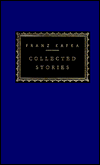
Everyman's Library
1993
Penguin Syrens pocket edition
1994
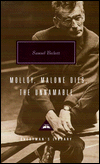
Everyman's Library
1997
Books about Gabriel Josipovici
Novels
Story and other collections
Theatre
Editing & commentary
Non-fiction
Books about GJ
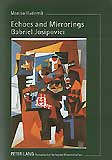
Monika Fludernik
Echoes and Mirrorings: Gabriel Josipovici’s
Creative Oeuvre
Peter Lang Publishing Group, 2000
The first monograph on Gabriel Josipovici gives close readings of a
selection of short stories, novels, plays and radio plays and a placing
of Gabriel Josipovici on the map of present-day British literature.