activities & other news..
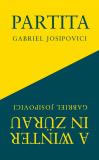
Partita and A Winter in Zürau
A novel and an essay in a single volume, coming August 2024
from Carcanet Press.
"This is Gabriel Josipovici’s most melodramatic and enigmatic fiction to date, as though one of Magritte’s paintings had come to life to the rhythms of a Bach partita."
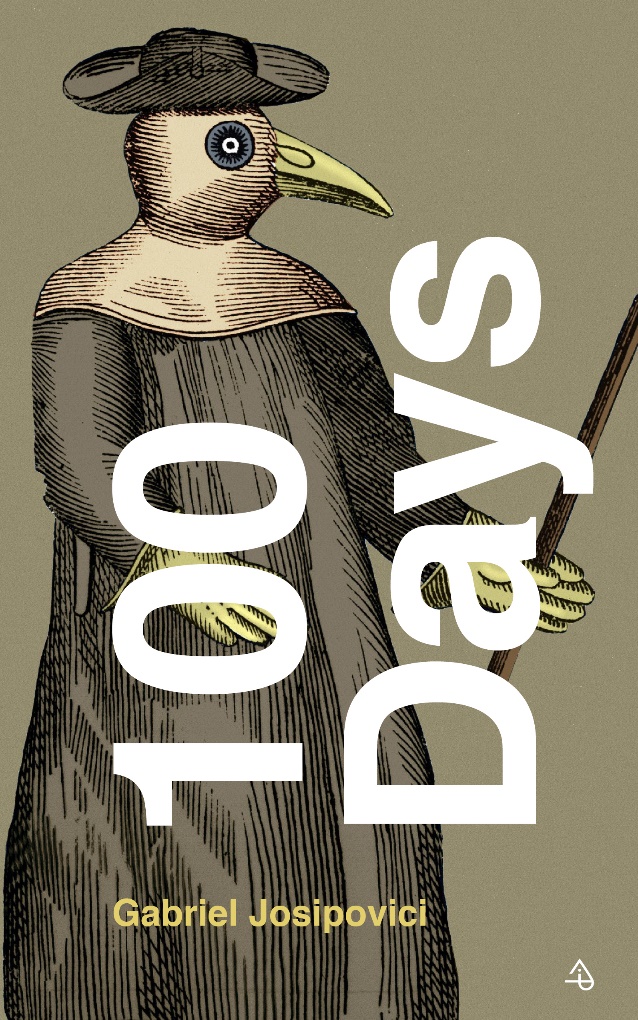
from Carcanet
When, in March 2020, the Covid pandemic led the Government to impose a total lockdown on ordinary life, Gabriel Josipovici began to write a diary tracing his life under the new dispensation. 100 Days responds to the escalating crisis, as well as to the arrival of Spring and then of Summer on the South Downs, but it is mainly concerned with a kind of accounting. Characteristically inventive, Josipovici chooses the ABC as a prospecting implement to stimulate reflection on subjects that run from Aachen to Alexandria, from Berio to the Border Ballads, from Zazie dans le métro to Zoos.
Previously, he reminds us, he has 'plundered episodes in my life to illustrate the intertwining of memory and forgetting, the desire to remember and the need to forget.' 'Elly said to me after reading my recent book Forgetting,’ he goes on, '"You don't seem to be afraid of revealing a great deal about yourself." But I don't think I feel it that way. I can "reveal" precisely because it does not seem to be part of me, it seems to belong to someone else, a writer I have lived with, an immigrant I have known.'
Josipovici's book, more than a meditation on a hundred days of the pandemic, is a reckoning with one writer's life, with his life's work and with his readers.
"100 Days is an autobiographical meditation on the early days
of Covid-19 from esteemed novelist Gabriel Josipovici" -- more about the author and his other works and reviews here.
Gabriel was interviewed online as part
of the Sephardi Voices oral history project.
The conversation is available here.
Forgetting
published by Carcanet's Little Island Press
To call it a "success" would be praise too simple for such a rich work. It is a book to be remembered and re-remembered.
Scott Beauchamp, The New Criterion
-- more information and links to reviews, plus a guest blog by the author, at Carcanet Press.
DURING SEPTEMBER 2021 ONLY it's available to read for free in the Carcanet Little Island Sampler via the Exact Editions reading room, accessible here.
Now available:
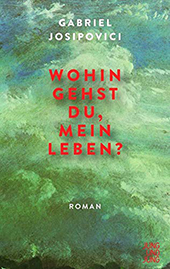
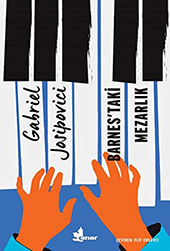
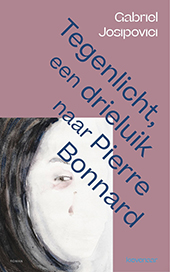
The Cemetery in Barnes
in German and Turkish, Contre Jour
in Dutch.
UNSOUND METHODS
interviews Gabriel Josipovici
about his methods and practices.
was a one-and-a-half-day international conference at the University of Dundee's Centre for Critical and Creative Cultures June 20-21, where Gabriel Josipovici was among the 14 writers, teachers, academics, publishers, and journalists who came toether in a concentrated forum of panel discussions, readings, and Q&A sessions exploring the meaning and usefulness of the essay as the most supple, porous, and open-ended literary form.
Video from the event is available here
Traps for the unwary
Gabriel Josipovici on a magnificent account of Bosch and Bruegel
In March 2017, the Times Literary Supplement published in full online Gabriel's review-essay of Joseph Leo Koerner's Bosch and Bruegel: From enemy painting to everyday life.
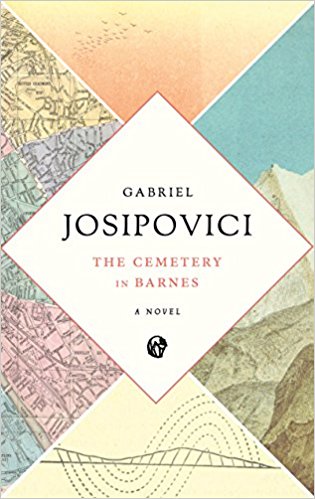
The Cemetery in Barnes: a novel
from Carcanet Press, Spring 2018
‘Gabriel Josipovici is one of our most brilliant writers – every new book is an event to look forward to,’ writes Deborah Levy. The Cemetery in Barnes, is no exception: a short, intense mystery novel that opens in gentle elegy and advances towards diabolism and murder. Its three plots, relationships and time-scales are tightly woven into a single story, the three main voices – as in an opera by Monteverdi – providing the soundtrack enhanced by the chorus of friends and acquaintances. The book advances in the present continuous, a dramatic risk that keeps us close to the action. The main voice is that of a translator who moves from London to Paris to Wales, the setting for an unexpected conflagration. The ending at once confirms and suspends the reader’s darkest intuitions. Characters live as many lives as they have readers. And, wittily, this novel visits and re-reads Josipovici’s earlier fiction as it goes. His is a plain-seeming art of rich accruals.
The Cemetery in Barnes confirms Josipovici as "one of the very best writers now at work in the English language, and a man whose writing, both in fiction and in critical studies, displays a unity of sensibility and intelligence and deep feeling difficult to overvalue at any time" (Guardian).
Click for a substantial review by Scott Beauchamp at Modern Age
Who Dares Wins
by Gabriel Josipovici
Reflections on Translation: a lecture given at a gathering of translators
Gabriel Josipovici 75th Birthday Celebration
Attenborough Centre for the Creative Arts
Tower Room 3, University of Sussex
Participants included
George Craig, Bryan Cheyette, Timothy Hyman, Dan Gunn, Paul Davies, Howard Cooper, Peter Boxall, Mario Semiao, David Herman, Guenther Jarfe, Stephen Plaice, Sarah Crangle, ending with a conversation between Gabriel and Bernard Hoepffner.
The Mind of the Modern:
An Interview with Gabriel Josipovici
by Victoria Best
In December 2015, a lengthy and substantive conversation was published in Numero Cinq online magazine, between Gabriel and a reader and critis of long standing. Victoria Best taught at St John’s College, Cambridge for 13 years, and has been a freelance writer since 2012. She has published several books on French literature, and her essays appear in Cerise Press and Open Letters Monthly. Currently she is writing a book on crisis and creativity.

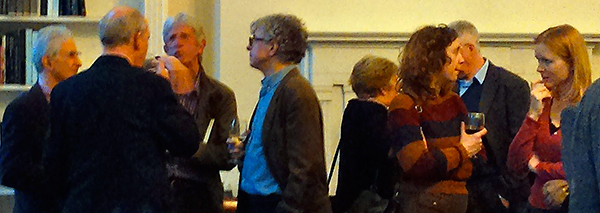
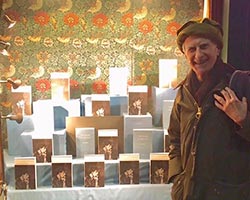
Gabriel Josipovici with friends and readers
at Hamlet Fold on Fold launch party, April 7th
Yale University Press, London
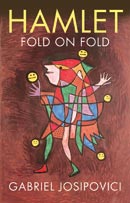
Hamlet Fold on Fold
From Yale University Press in 2016, four hundredth anniversary of Shakespeare's death, a new view of the famous play. Hamlet is both utterly familiar and forever out of reach. Its familiarity comes not only from its status in the culture but as the play unfolds, every image, every speech, every scene, seems to call up innumerable parallels elsewhere in the play, yet none of the parallels is exact. Thus we are forever reaching towards meaning, and forever frustrated. In this we are like Hamlet himself, who tries out roles in a variety of plays, yet always finds that he does not fit any of them. In the end, because doing nothing is not an option, he adopts one of the roles, with disastrous consequences. Gabriel Josipovici's attentive detailed reading of the play grasps the interplay between Hamlet’s and our own need for understanding.
NY Times review here, bottom of page, describing it as "lightly erudite and consistently imaginative."
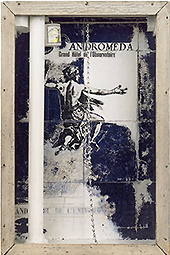
A nice review has appeared at a blog with the appealing title Un Dernier Livre Avant La Fin du Monde by one "Ted."
Philippe Annocque's blog Hublots parce que la visibilite est mauvaise has an excerpt of a video interview with Gabriel Josipovici in the bookstore Charybde, on the occasion of its French publication.
Revue LISA, a print journal published by the University of Rennes, has made available online its February 2014 issue dedicated to the work of Gabriel Josipovici.
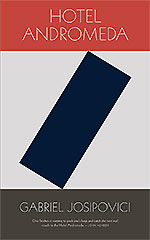
HOTEL ANDROMEDA
In a house in a quiet street in North London, Helena struggles with her self-appointed task of writing a book about the reclusive American artist Joseph Cornell. At the same time she dreams and thinks about her sister Alice, working in an orphanage in Chechnya. She is certain that Alice despises her for living a life of comfort and privilege, far away from the horrors of war; yet she knows too that her work is more than self-indulgence. How to reconcile these two visions?
Enter Ed, a Czech journalist and photographer who claims he has been working in Chechnya and brings news of Alice, along with the request for a bed for the few days he has to be in London…
Gabriel Josipovici’s sparkling new novel charts the course of those few days, as Joseph Cornell’s mysterious life and the strange boxes he constructed wage a silent struggle in Helena’s mind and spirit with the imperatives of the present.
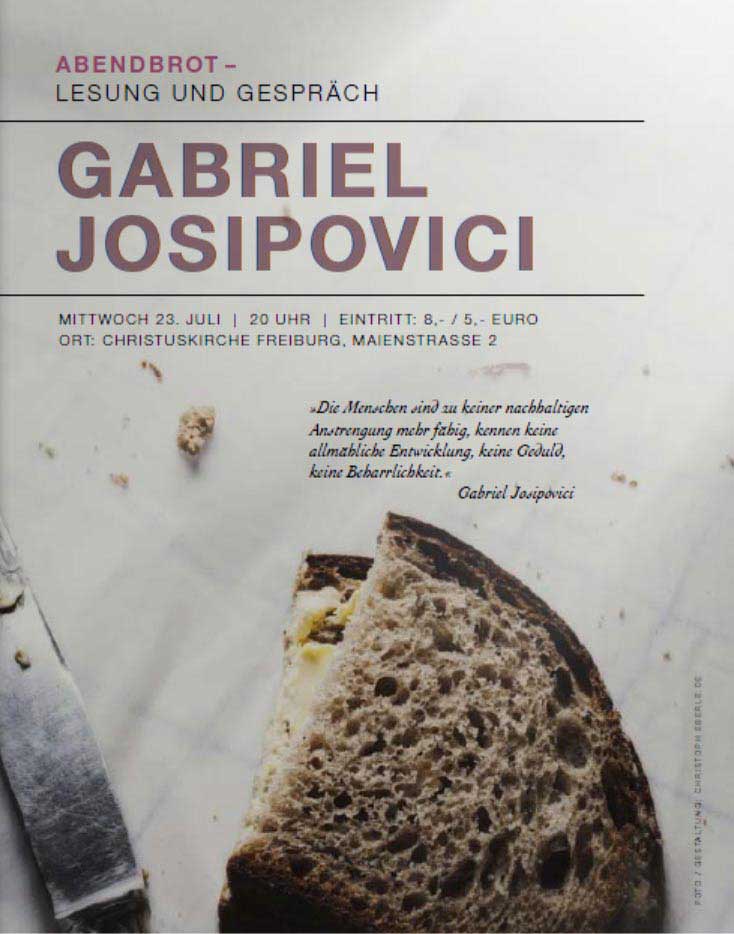
German readers of Gabriel Josipovici can hear him reading from his work, including the novel Moo Pak published by Suhrkamp, in a second event at the Christuskirche, Maienstrasse 2 in Freiburg, moderated by literary critic and journalist Ariane Huml and with the Freiburg author Annette Pehnt reading the German translation.
PDFs of
poster and flyer
with full information in German for this event
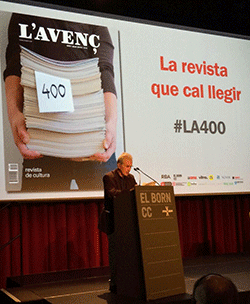

ZIG-ZAG, TWIST AND TURN: TOYING WITH GABRIEL JOSIPOVICI
Dalarna University and the Transcultural Identities Research Group at Dalarna University, in conjunction with ULICES (University of Lisbon Centre for English Studies, Portugal) and ERIBIA E.A.2610 (University of Caen, France), are pleased to host an international conference on the life and work of the British writer Gabriel Josipovici. The event will be held at Dalarna University, Falun, Sweden, 22-23 September 2014.
More information here...
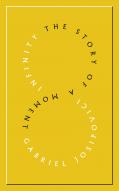
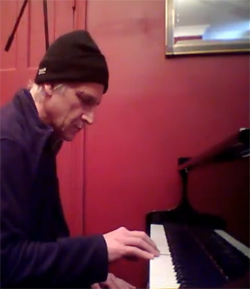
Thank you for writing and publishing the book Infinity The Story of a Moment, which I found both profound and heartwarming. The music described in its pages make my head spin even as I read it on the page, and I felt impelled to try Six Sixty-Six out to see what effect it had. It was very strong and strange. Because I was relying on an inner counting I could not drift into the trance state that beckoned, and had to remain in control of the inner voice...
Listen to Six Sixty-Six and read more fully about the composition here, and it's also available here.
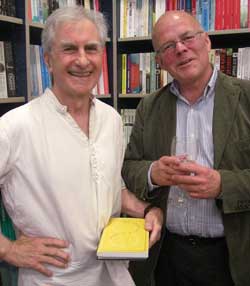
Gabriel Josipovici and publisher Michael Schmidt of Carcanet Press at the May 24, 2012 launch of Infinity at Belgravia Books, London.
"The piano is not an instrument for young ladies Massimo, he said, it is an instrument for gorillas. Only a gorilla has the strength to attack the piano as it should be attacked, only a gorilla has the uninhibited energy to challenge the piano as it should be challenged."
Thus Tancredo Pavone,the wealthy and eccentric Sicilian nobleman and avant-garde composer, as recounted by his former manservant in the course of the single extensive interview which is this book. But as Massimo recalls what his master told him about his colourful life in Monte Carlo in the twenties, in Vienna studying with a pupil of Schoenberg's in the thirties, in post-war Paris and in Nepal where he underwent the revelation which fuelled his later music, and repeats Pavone's often outrageous opinions about everything under the sun, from the current state of civilisation to the inner life of each note, from why beautiful women are always unhappy to the vanity of his fellow composers, it becomes comically clear that not only does Pavone not always distinguish between memory and fantasy, but that Massimo does not always understand what it is he is repeating. Yet what ultimately emerges is the picture of a moving relationship between two people from very different walks of life, and, above all, the fact that behind Pavone's outrageousness and eccentricity lies a wounded and vulnerable man of profound integrity, for whom living and making music were always one.
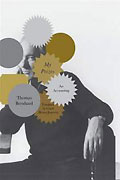
"Thomas Bernhard and his Prizes" is an essay by Gabriel Josipovici focusing on My Prizes: An Accounting which appears on the Thomas Bernhard site in its original form, which differs from what was published in New Statesman.
"Modernism still matters," whicih appeared in connection with the publication of What Ever Happened to Modernism?, also appears on New Statesman's site.
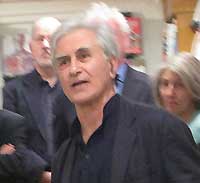
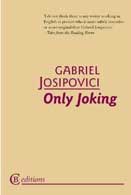
Double book launch party for Gabriel Josipovici's two British publications of 2010, Only Joking and Heart's Wings, at Daunt Books in Holland Park on October 28, 2010, was a well-attended and happy event, with both publishers present and the author reading from "The Plot Against the Giant" in Heart's Wings -- more photos here.
At Shakespeare & Company in Paris, another reading, organized by CB Editions, publisher of Only Joking as well as many other worthy titles, was held on November 15th during which Gabriel Josipovici again read; photos are at CB Editions publisher Charles Boyle's blog, with a link to even more in his Facebook album.
2010: happy & busy year
for Gabriel Josipovici readers
Heart's Wings: New & Selected Stories from Carcanet Press in September
What Ever Happened to Modernism? from Yale University Press in September
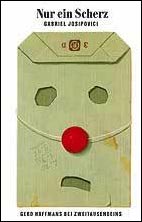
Only Joking in English at last from CB Editions in October
Revue LISA/LISA e-journal will devote its February 2012 issue to Gabriel Josipovici, and has issued a call for papers:
We welcome original articles in English or French addressing any aspects of Josipovici's works (fiction, plays, criticism, biographical aspects). Contributions should be from 4,000-10,000 words in length and should be accompanied by a short abstract (200 words). Please mail submissions or send inquiries to Marcin Stawiarski ([email protected]).
And here is the online edition of this special issue.
After
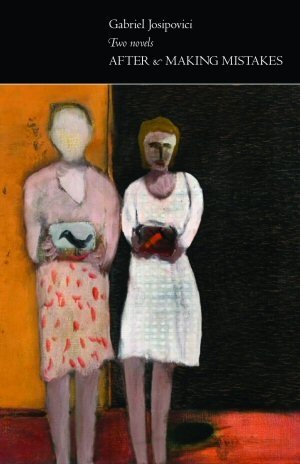
and
Making Mistakes,
two new novels by Gabriel Josipovici in one volume, is now available from Carcanet and booksellers. More information from the publisher here.
Reviews (as they arrive):
Lee Rourke in The Independent
Jonathan Beckman in The Jewish Chronicle
Victoria Best at Tales from the Reading Room
Four essays on Everything Passes (of perhaps more: tell us if you know of them), written as part of an on-line colloquium that didn't happen (or hasn't happened yet), and have been published as blogs by each of the writers.
Stephen Mitchelmore at THIS SPACE
Richard Crary at THE EXISTENCE MACHINE
David Auerbach at WAGGISH
Daniel Visel at WITH HIDDEN NOISE
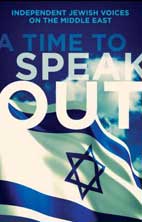
Gabriel Josipovici has contributed the essay, "Cousins" to this collection of the Independing Jewish Voices on the Middle East. A pdf of the essay is here, thanks to ReadySteadyBlog and Verso Books, the publisher.

Writer in Time: Tamara Yellin interviews Gabriel Josipovici in the Jewish Daily Forward of 4 March 2009 about his dedication to the modern European tradition in fiction. Missing from the online version is this paragraph:
Born in Nice in 1940, Josipovici escaped with his mother to Egypt in 1945 and in 1956 arrived in England, where he has lived ever since. This background of displacement has doubtless contributed to his unique sensibility. His locations and characters are often mundanely English, yet there is an alertness and unease in their portrayal which is rarely found among English Jewish writers: the alertness of a writer who has the stone of dislocation forever in his shoe.


"The Dark Waters" is a story by Gabriel Josipovici now appearing in the Eclectic England section of the Mad Hatter's Review.


What ever happened to Modernism? Gabriel Josipovici's John Coffin Lecture in Literature on this subject, at the Institute of Germanic & Romance Studies of the University of London's School of Advanced Study, on March 14th, was very well attended. A blog account isat Ellis Sharp's The Sharp Side.
Gabriel Josipovici in Conversation with Bryan Cheyette
http://jewishbookweek.com/2007/040307a.php
on Sunday, March 4, 2007.
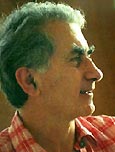
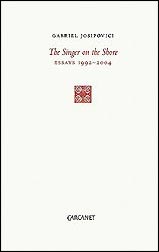
Two new Gabriel Josipovici titles in 2006:
The Singer on the Shore, a collection of essays and reviews,
March 2006,
from Carcanet
Press,
Reviewed
in The Guardian
and
Everything Passes, a novel, also from Carcanet
Press, September 2006 (now at Amazon
UK).
A major essay, "By a cool well: where to find the princesses and their frogs" in the 8th July 2005 issue of the Times Literary Supplement, reviewing Selected Tales: Jacob and Wilhelm Grimm, edited and translated by Joyce Crick, Oxford University Press. Opening paragraphs:
Why do we need another edition of Grimm's Fairy Tales? Are there not already several complete editions in English and any number of picture-book selections for children, with new ones appearing every Christmas? Instead of answering this question directly let us take another example of a "world's classic", the Bible. Though there are countless editions of the Bible around, and a large number of commentaries, OUP's World's Classics edition, published in 1997, filled a yawning gap. Edited by Robert Carroll, an Old Testament scholar with a real feeling for literature, and Stephen Prickett, a literary critic and scholar with a strong interest in the Bible and its afterlife in literature, this contained a long and extremely interesting introduction and copious footnotes. It did not try to summarize the many biblical commentaries, which tend to be theological and historical, but rather to raise questions about the Bible as a book and a great literary document, which of course it is, as well as being a cultural and religious one. In a similar way, Joyce Crick, a fine scholar of German literature who has always been adept at addressing a larger audience than simply her fellow Germanisten, has set out here to rescue Grimm's Tales both from children and from folklorists and to help us see it as a major literary work. Like Carroll and Prickett, she has done a magnificent job, and both she and OUP are to be congratulated.
For too long these haunting tales have been pulled out of context and subjected to mythological and psychological exegesis. Crick has done us an enormous service by returning them to their context in the Germanic lands of early modern Europe (Brueghel has always seemed to me a better key to their interpretation than Freud, Marx, or Mircea Eliade). Though she does not include some of my favourite stories (the wonderfully surreal "Herr Korbes" and "Lauschen und Flohchen", for example), and though she can do nothing about conveying the huge linguistic range of the collection, this is nevertheless a volume to treasure.
Full text available to TLS subscribers at
http://www.the-tls.co.uk/archive/story.aspx?story_id=2111602
http://www.amazon.co.uk/exec/obidos/ASIN/0141188200/
on Saturday, May 28th, at 7 pm.